Support for PIX4D-based processing and training workflows for teams that need practical photogrammetry capability as well as project delivery.
Use Cases
Photogrammetry use cases from trench capture to agency documentation.
These examples show how photogrammetry can be applied from the air and on the ground, with the workflow shaped around access, safety, reporting needs and the deliverable the project team actually needs.
Ground captureGround-based photogrammetry can be used for trench capture, utilities, close-range assets and staged works.
ComplianceWorkflows can be scoped to support URA IPAG requirements and documentation-led review needs.
PlatformsPartner to PIX4D, Skyline Software and Global Mapper Pro from Blue Marble Geographics.
ExperienceProjects completed for HDB, GovTech, LTA, JTC and PSA, among others.
Use cases explain the value better than generic service labels.
Photogrammetry is not only drone mapping. It can be aerial, ground-based or mixed, depending on the site, the access conditions and the evidence the team needs to keep after the physical environment changes.
That makes it useful for recurring construction records, trench capture before cover-up, facade inspection planning, agency or infrastructure documentation, and digital-twin-ready records where clear visual context matters as much as the final geometry.
Visual examples
Applications across construction, trench, facade and infrastructure work.
The same core capture logic can be adapted to different environments and different reporting needs. These visuals help show the range more clearly than a single hero image can.
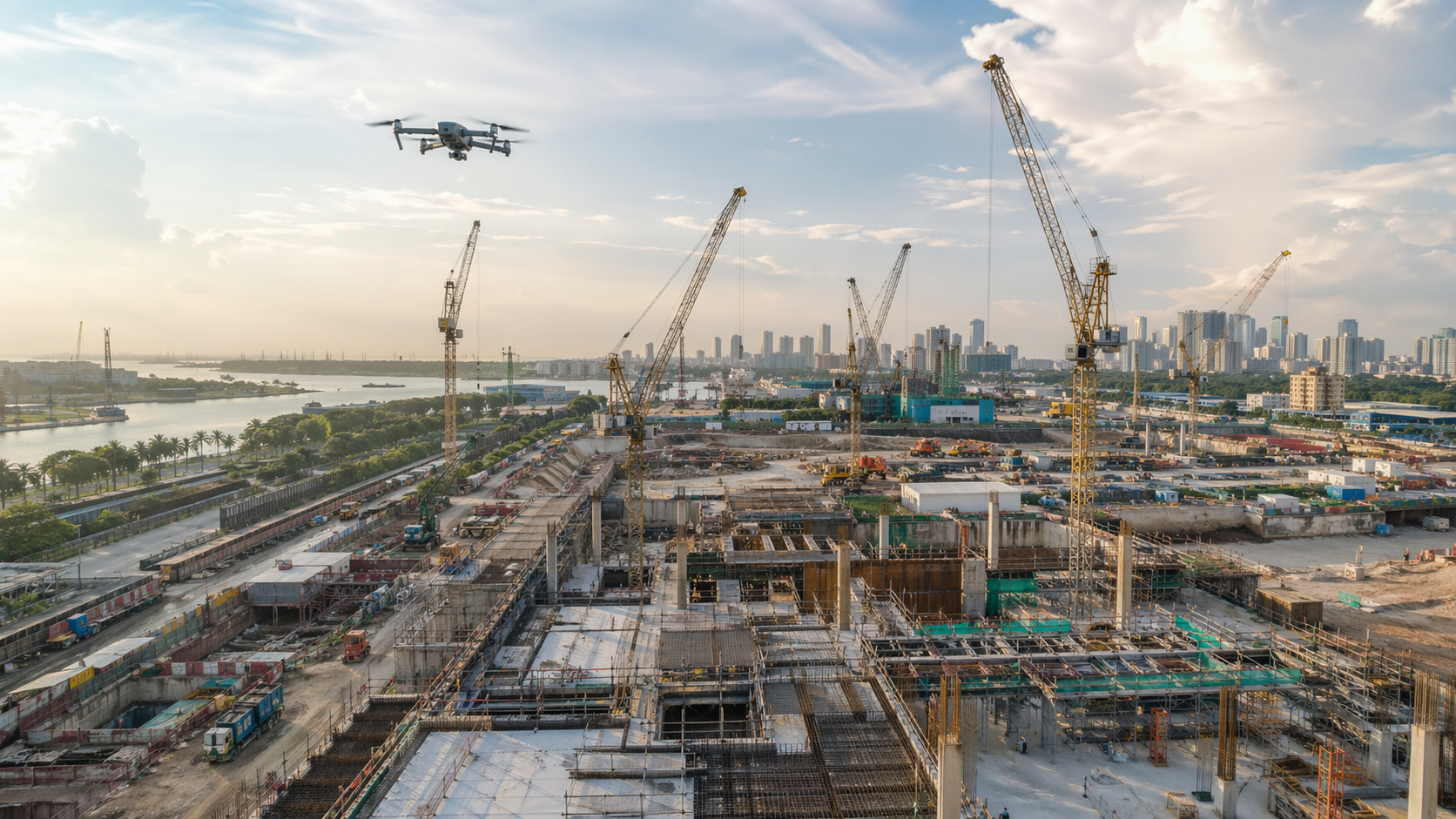
Construction progress
Repeatable capture for timeline comparison, reporting and stakeholder updates.
Trench capture
Ground-based documentation before cover-up or as-built coordination reviews.
Facade inspection
Close-range capture for condition review, maintenance planning and safer access strategy.
Infrastructure records
Asset documentation, digital twin preparation and multi-stakeholder review support.
Use case 01
Construction progress monitoring and site-wide records.
Recurring photogrammetry makes it easier to compare stages of work, communicate change clearly and keep a more dependable visual archive across the life of a project.
Where it fits
Large developments, infrastructure works, phased construction, stakeholder reporting cycles and milestone-based progress reviews.
Why photogrammetry helps
It creates a connected site record rather than isolated photos, which makes visual comparison and coordination easier over time.
Typical deliverables
Repeat-visit image sets, mapped context, textured 3D models, milestone comparisons and reporting visuals.
What project teams gain
Better communication across owners, consultants, contractors and agency stakeholders who need consistent visibility.
Use case 02
Ground photogrammetry for trench capture and before-cover-up records.
Photogrammetry can be used on the ground to document open trenches, utility corridors, reinforced details and staged works before the physical condition is no longer visible.
Where it fits
Utility coordination, trench excavations, underground works, civil interfaces and construction stages that need documented evidence before reinstatement.
Why photogrammetry helps
It captures more connected context than isolated inspection photos and makes the trench condition easier to revisit after the work is closed up.
Typical deliverables
Ground-based image sets, measurable context, 3D reconstruction, annotated review material and coordinated record packages.
What project teams gain
Clearer as-built understanding, stronger documentation for coordination and a record that supports later questions about what was present at a specific stage.
Use case 03
Facade inspection, maintenance planning and close-range asset review.
Photogrammetry supports close-range documentation where a facade, roofline or asset face needs clearer visual evidence and a better record for review or maintenance planning.
Where it fits
Building envelopes, architectural facades, industrial structures, maintenance reviews and hard-to-access external elements.
Why photogrammetry helps
It combines visual richness with connected spatial context, which can be more useful than disconnected close-up inspection photos.
Typical deliverables
Close-range image documentation, textured facade models, review imagery and organized defect or condition-reference packs.
What project teams gain
Better maintenance planning, clearer consultant communication and a stronger basis for deciding what needs closer physical inspection next.
Use case 04
Agency, infrastructure and URA IPAG-aligned documentation workflows.
Some projects need more than strong imagery. They need organized deliverables, clear review material and a workflow that can be scoped to support agency expectations or URA IPAG requirements.
Where it fits
Public-sector and infrastructure environments, regulated submissions, documentation-heavy projects and multi-stakeholder review workflows.
Why photogrammetry helps
It creates a connected record that supports review, communication and future reference across teams who may not have visited the site in person.
Typical deliverables
Reporting imagery, mapped context, digital twin foundations, measurable records and submission-support documentation packages.
What project teams gain
A clearer evidence trail and a workflow informed by projects completed for HDB, GovTech, LTA, JTC and PSA, among others.
Platforms & delivery
Technology partners and field capability behind the workflows.
The outcome is not only about capture. It also depends on the software stack, control strategy and delivery discipline used to turn field imagery into something usable.
Stronger 3D geospatial visualization and review workflows where the project needs more than a raw field model alone.
Blue Marble Geographics tooling support for mapping, geospatial organization and project-ready data handling.
Survey-grade equipment is available when tighter control, stronger positional confidence or submission-led requirements need it.
Need a use case shaped around your project?
Share the site type, whether the work is aerial or ground-based, and whether URA IPAG or agency review requirements apply, and the capture workflow can be scoped around that need.